
Cat
Kerk Taylor
1997–Current
- Outside Miramar Library, 68 Miramar Ave, Miramar, Te Whanganui-a-Tara Wellington
Type
- Sculpture
Medium
- Oamaru stone
Dimensions
- W1450 x H1540 x D840mm

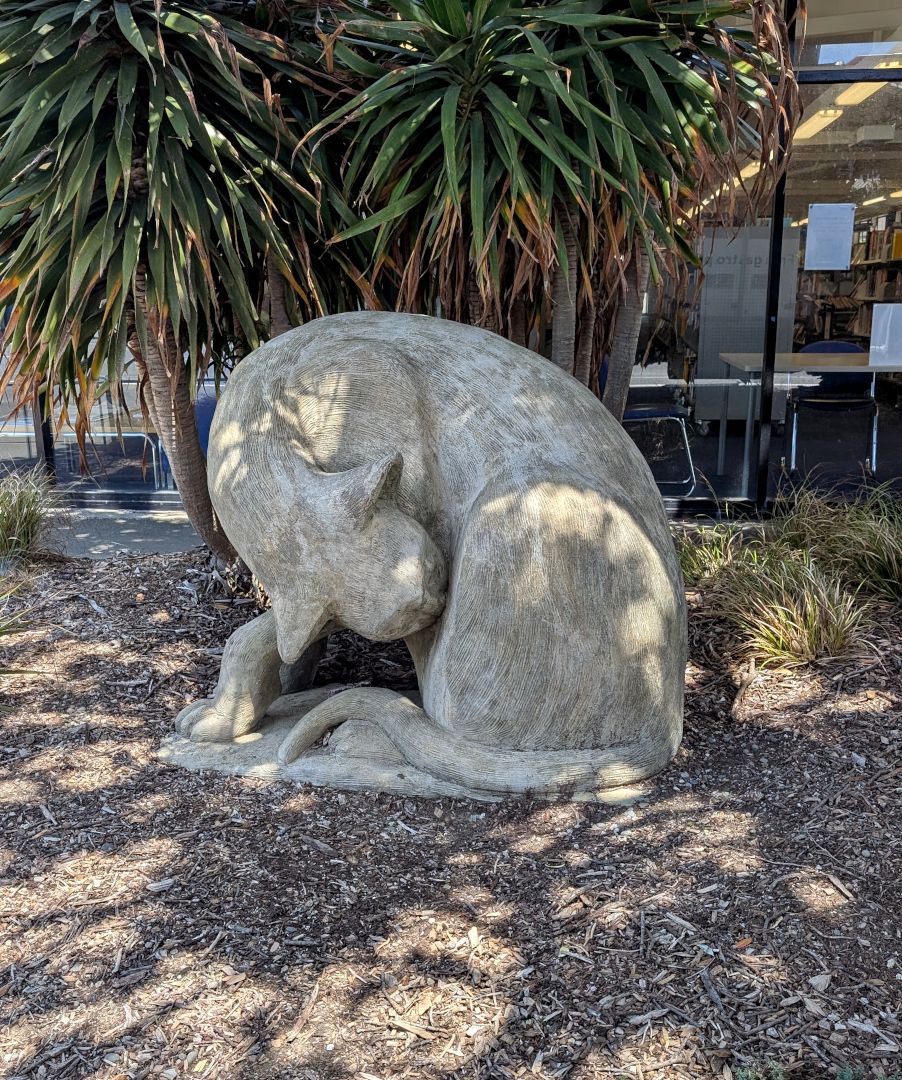
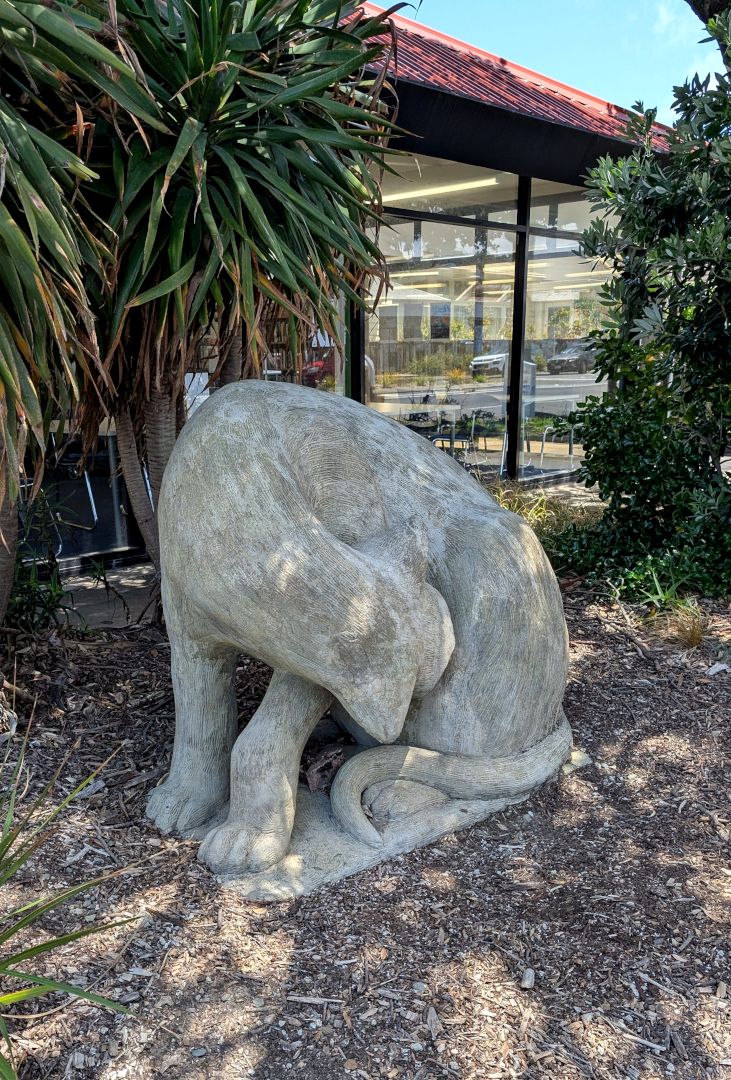
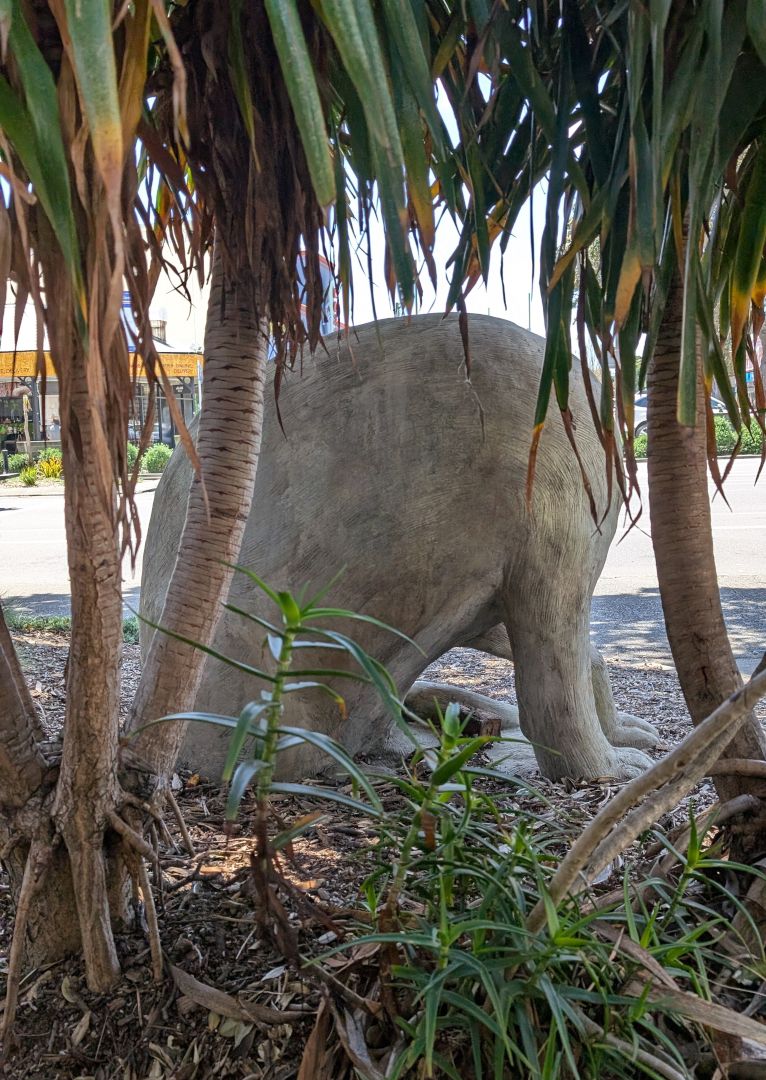
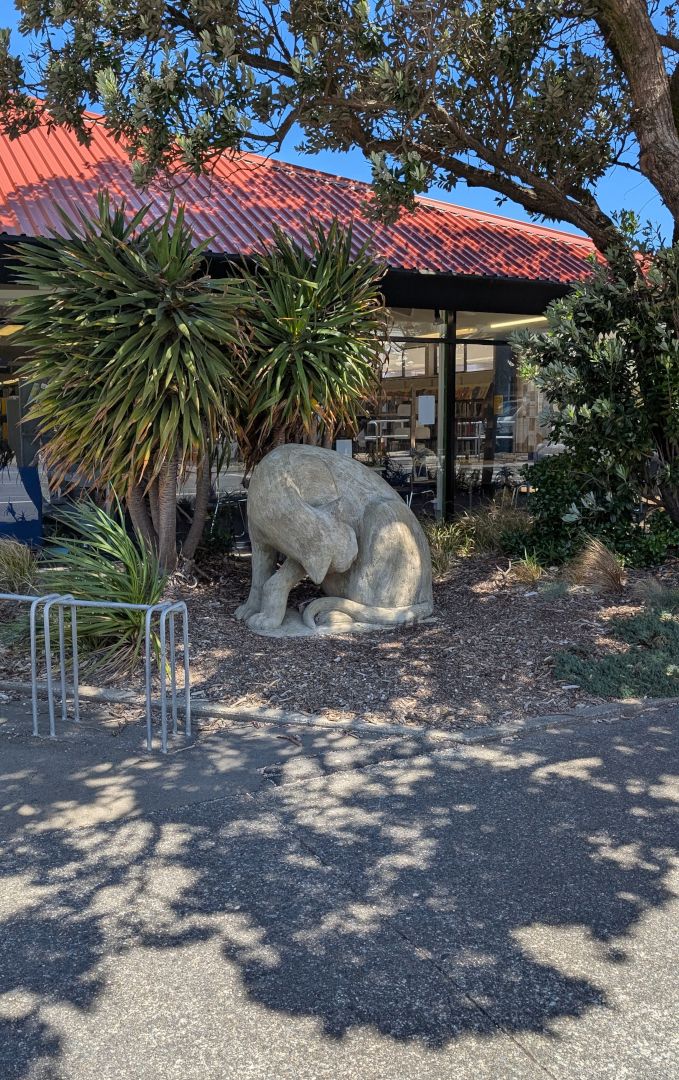
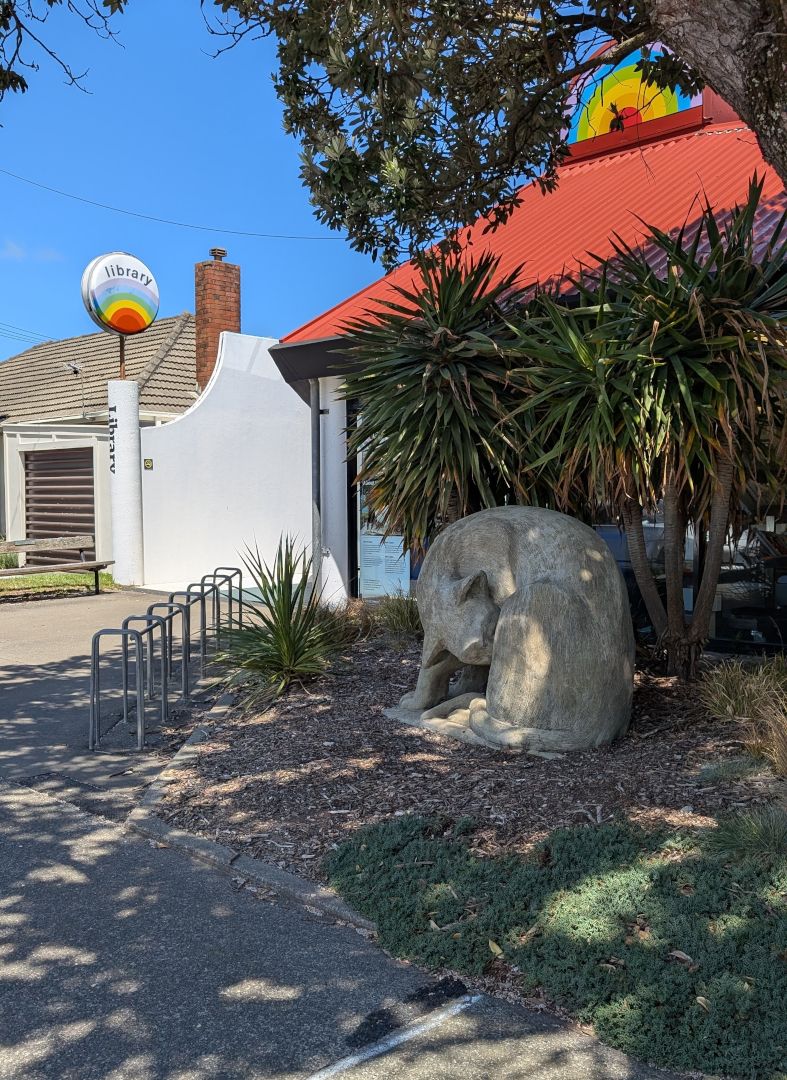
Kerk Taylor, ‘Cat’ (1997), Miramar Library, Te Whanganui-a-Tara Wellington
Image: Bronwyn Holloway-Smith, Public Art Heritage Aotearoa New Zealand, Nov 2025
- DETAILS
- MAP
Description
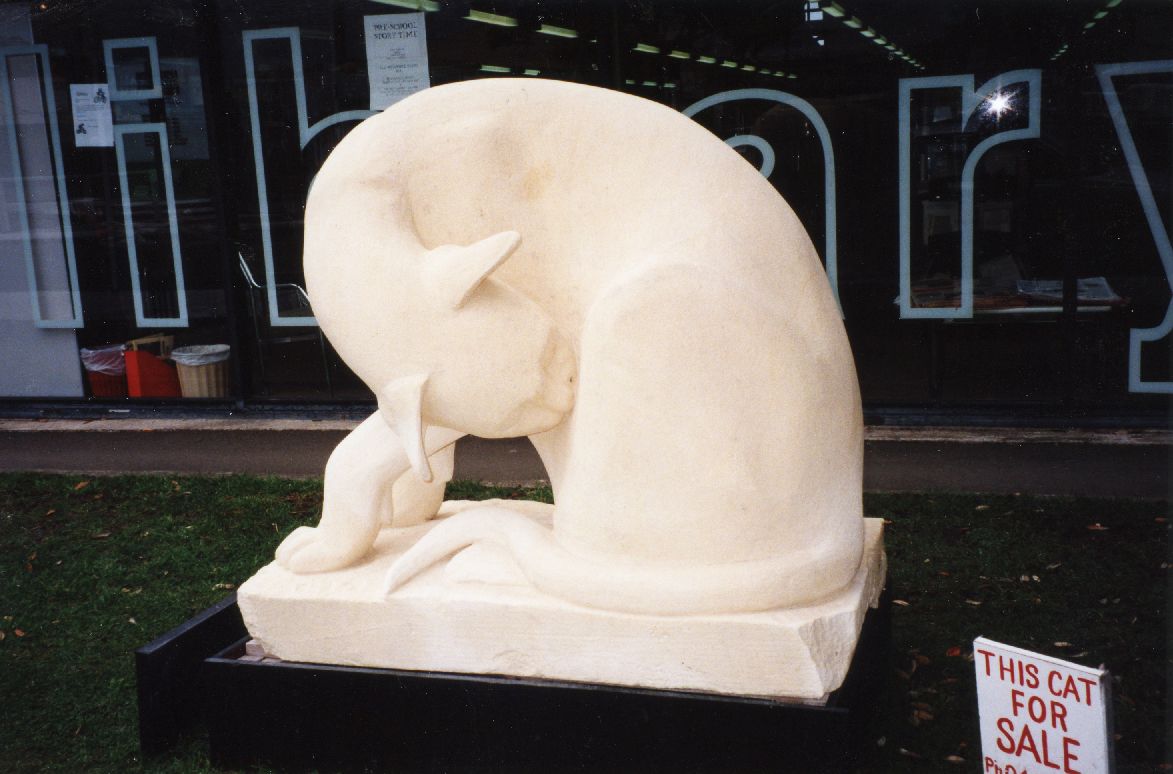
The cat was created during the Tareitanga Sculpture Symposium at Frank Kitts Park in Wellington (Jan-Feb 1997). Sculpted from a two-tonne block of Oamaru stone, it took 150 hours to complete. While the size of the cat suggests one of the larger, fiercer felines, its pose (cleaning itself) is entirely benign.
The sculpture was inspired by a cat that regularly visited the artist’s studio in Miramar.
Following the symposium the sculpture was temporarily re-sited at the Miramar Library in 1997, where it was listed as being ‘for sale’. Local residents, led by Gordon Copeland, established a “Save The Cat Trust” and began raising funds to purchase the sculpture to make it a permanent feature with local artist/writer Burton Silver (author of international bestseller ‘Why Cats Paint’) donating a substantial amount towards the effort. With a third of costs raised, the Wellington City Council stepped in to meet the balance with funds from a community grant pool, and the sculpture was formally purchased in June 1999.
In 2023, due to general weathering and deterioration (including broken ears), the sculpture was restored under the guidance of local artist Kim Beaton and Taylor’s son, Inia Taylor. Inia holds a group of bronze maquettes that Kerk based the sculpture on that assisted with remaking the cat’s ears.
Inia said, at the time, “Being able to repair this artwork made by my father means the world to me. The idea that ‘Cat’ can survive and live on as an integral part of the community serves as a really good memory of my father and the beautiful art that he made.” He further speculated that, as an arts educator, his father would have loved the fact that children enjoy the sculpture so much. Taylor had previously held an exhibition called ‘Please Touch’ where visitors were encouraged to physically interact with the artworks.
On the restoration, Beaton said “We wish to return the ‘Cat’ back to the artist’s vision of sweet, round and gentle presence. The purpose of art is to create an emotional touchstone. Good art encourages us to feel a specific connection to the surroundings.”
See also: