
Te Uruhau
Te Oranga Whareaitu
1999–Current
- Main Entrance, Fran Wilde Walk, Wellington Regional Stadium, Te Whanganui-a Tara Wellington
Type
- Installation
- Wall Mounted Sculpture
- Mural
Medium
- Copper
- Wood
- Aluminium
- Paint
Dimensions
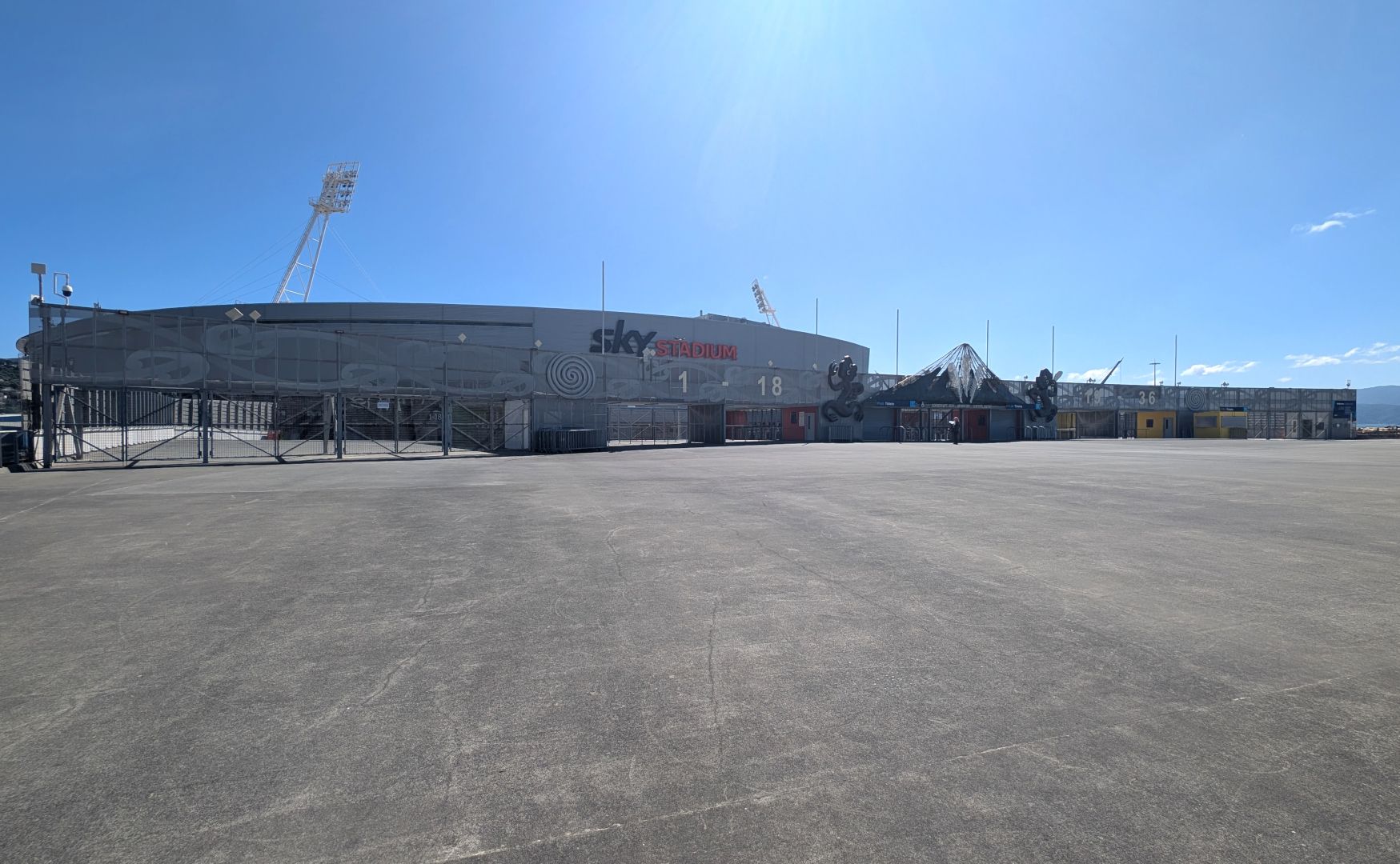
- H5000 × W90,720 × D300mm

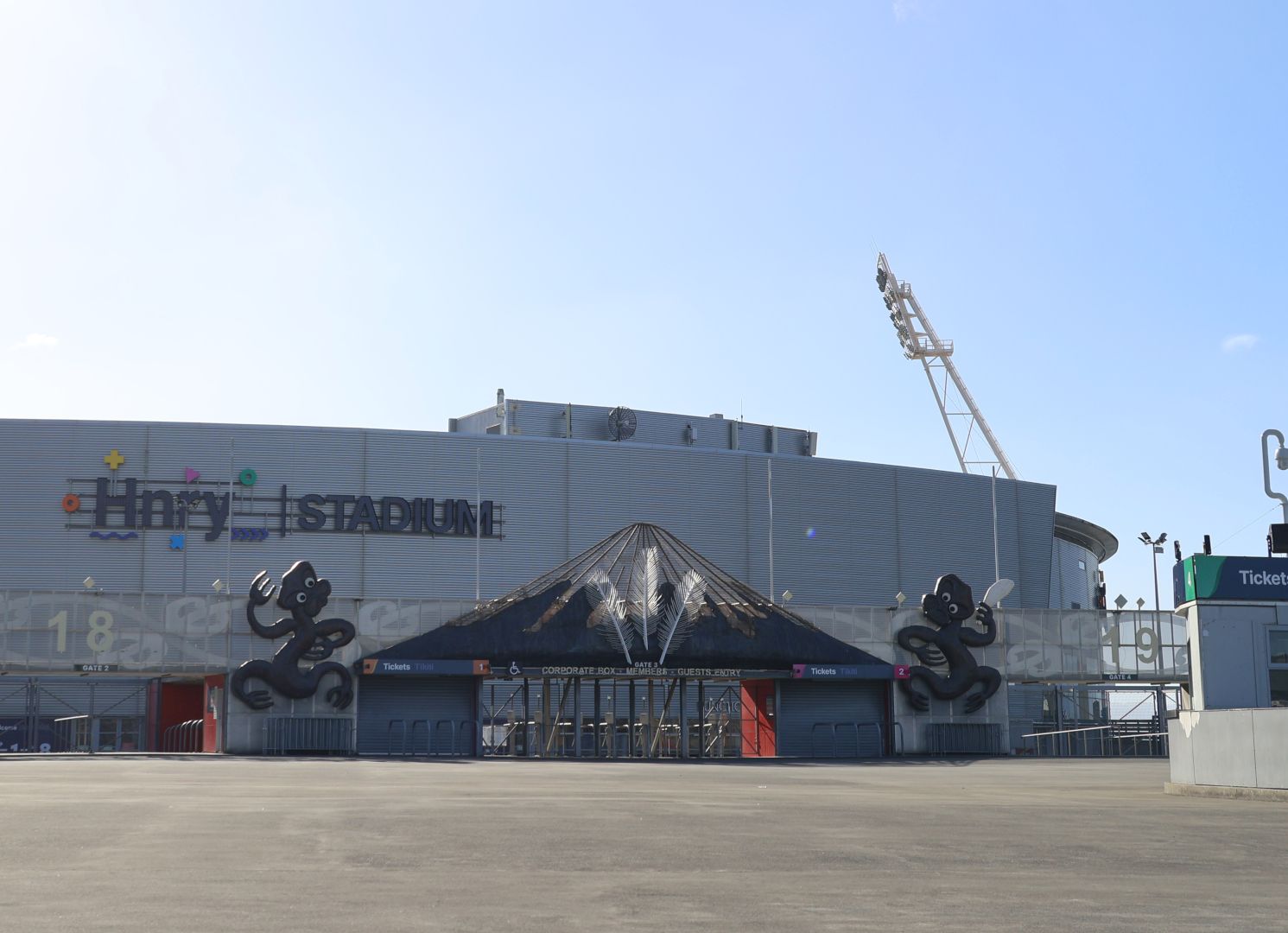
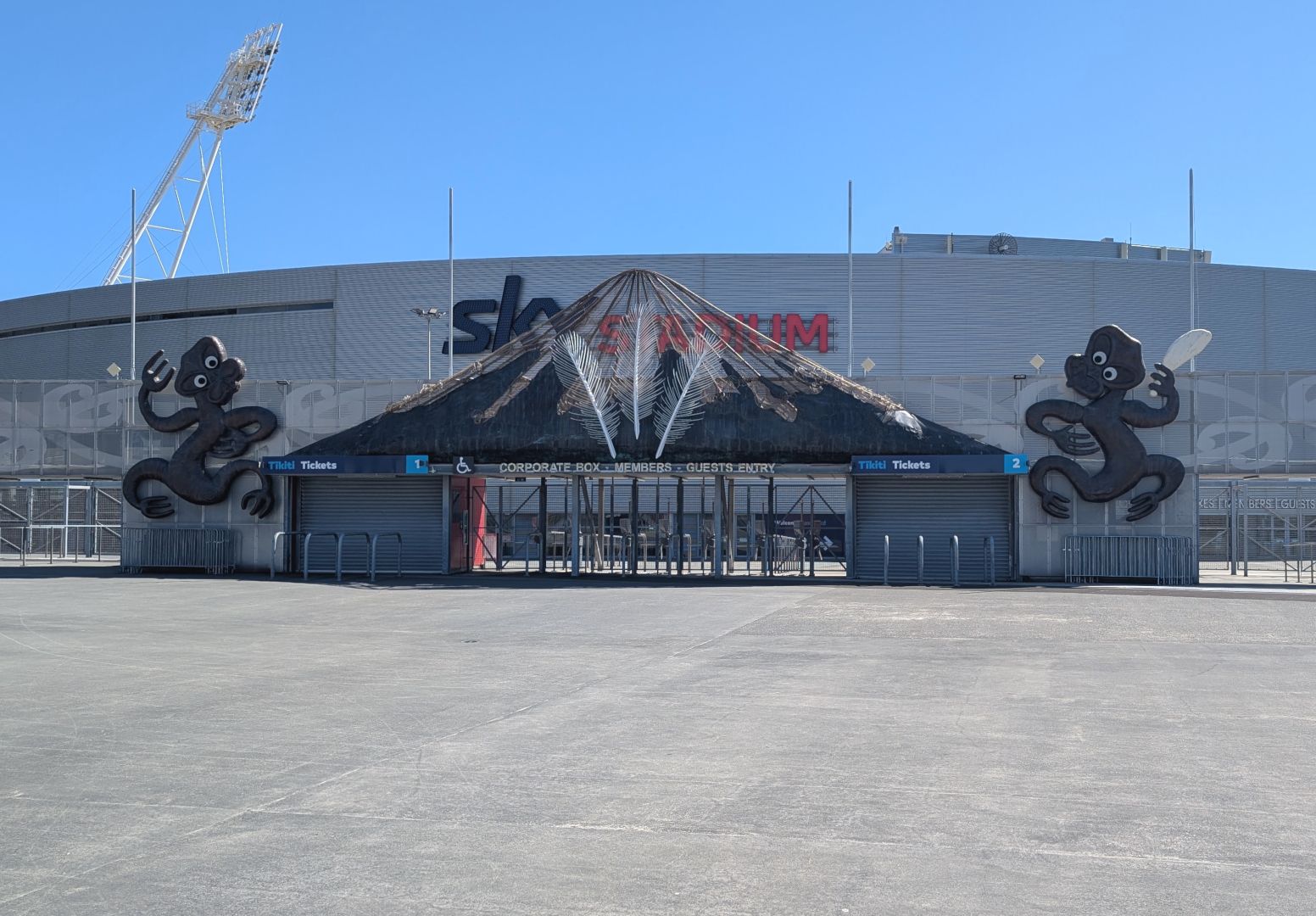
Te Oranga Whareaitu, ‘Te Uruhau’ (1999), Wellington Regional Stadium Walkway, Te Whanganui-a-Tara Wellington.
Image: Hannah Kahu, Hnry Stadium, Jul 2026
- DETAILS
- MAP
Description
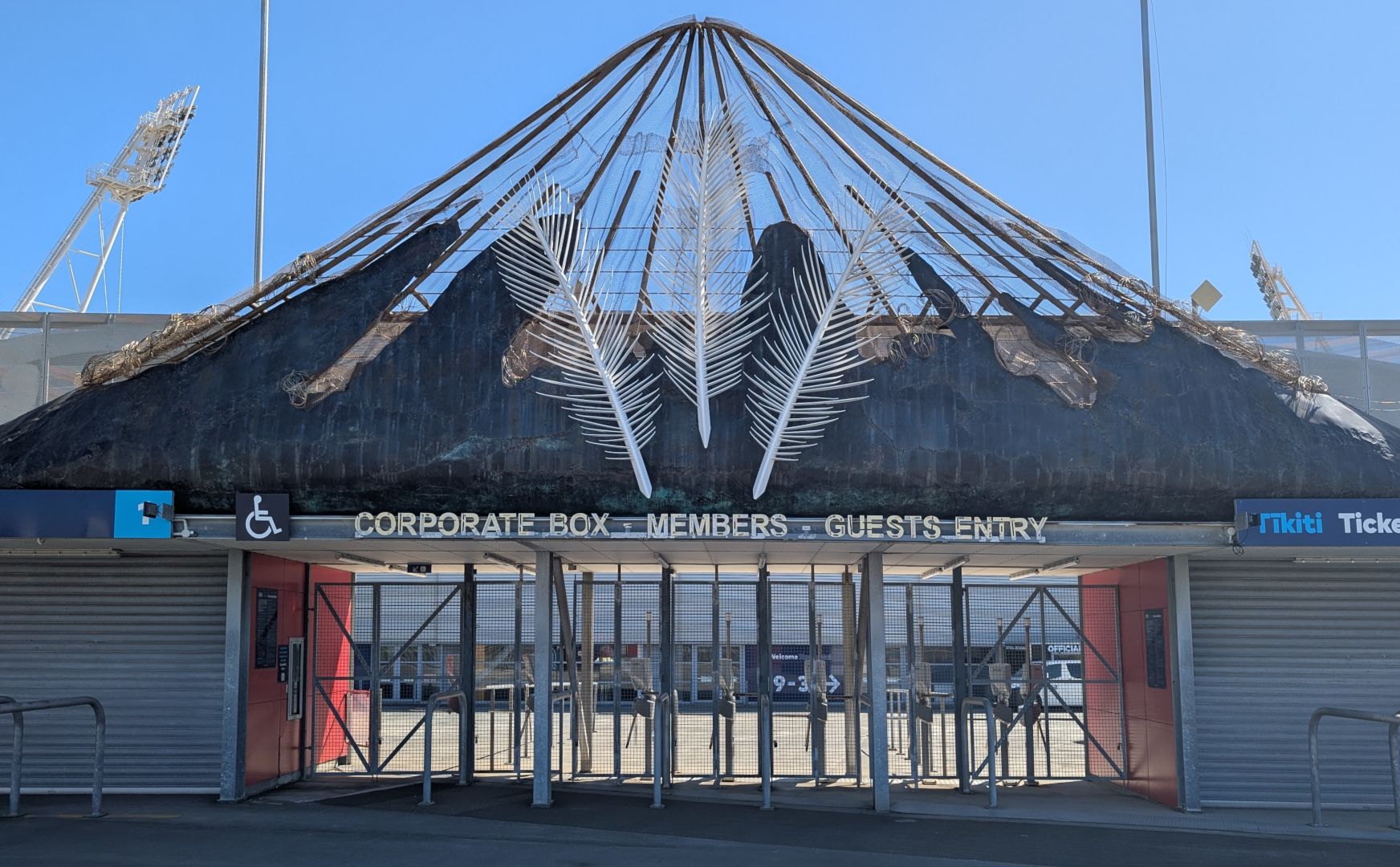
This multimedia wall mounted sculpture and mural was commissioned by the Wellington Tenths Trust for the Wellington Regional Stadium Trust to be incorporated into the new stadium’s entryway. The commissioning process was led by Matene Love.
‘Te Uruhau’, the main entrance design, was created by Te Oranga Whareaitu on behalf of the Wellington Tenths Trust. The Wellington Tenths Trust represents the descendants of Taranaki whānui who were owners of Wellington and the Hutt Valley in 1840. The Tenths Trust supported the development of the Wellington Regional Stadium throughout the design and building process. The Tenths Trust assisted in transferring the ‘Mana’ of the historic Athletic Park venue to the new Stadium.
The design elements of the work are:
Ko Rua Taranaki (The Mountain)
The centrepiece represents Rua Taranaki (the mountain) as viewed from the North side. The mountain represents the challenge of reaching the pinnacle of achievement. It symbolises the hurdles to be overcome by people to achieve their valued goals.
Rua Taranaki also portrays the identity of local Taranaki Whanui (Taranaki Tribes) represented by the Wellington Tenths Trust. Ancient tradition has it that Rua Taranaki travelled to his isolated home on the West Coast of the North Island after being discovered with his lover Pihanga, by her husband Tongariro.
Taranaki Maori, wherever they live, still revere their mountain.
The songs and stories of Taranaki Whanui (Taranaki tribes) still tell of Rua Taranaki and the trials and tribulations of his people.
Raukura (The Feathers)
Overlaid on the mountain are three white feathers representing the Raukura. Raukura is a legacy left for all people by the prophets of Parihaka in Taranaki.
It conveys the following message:
Kororia ki te Atua I runga rawa (Glory to God on high)
Maungarongo ki runga I te whenua (Peace on earth)
Whakaaro pai ki nga tangata katoa (Goodwill to all mankind)
This message was a central teaching of the prophets, Te Whiti o Rongomai and Tohu Kakahi of Parihaka.
The three elements as represented by the Raukura are:
- An acknowledgement of spirituality and spiritual forces.
- The importance of making peace within yourself and with others.
- The necessity of maintaining goodwill, despite conflict.
As people enter and leave the Stadium they pass under the Raukura, as a symbol of peace and a reminder of the importance of maintaining a spirit of friendship and unity in the face of competition.
Manaia Figures
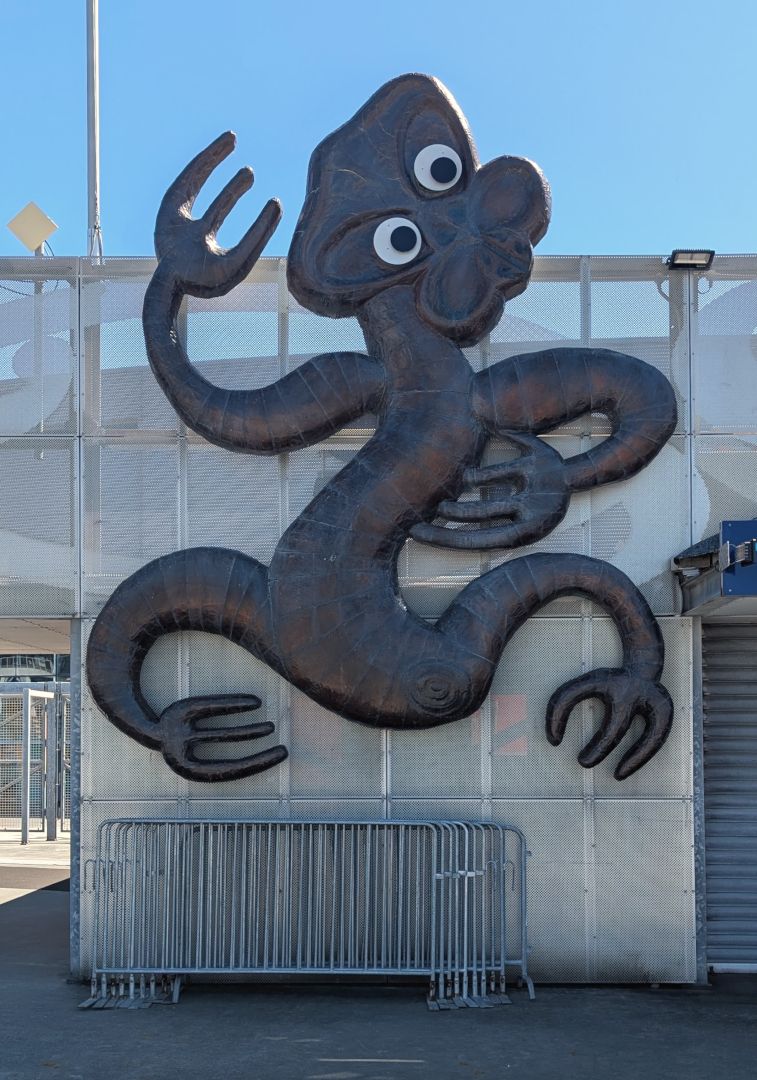
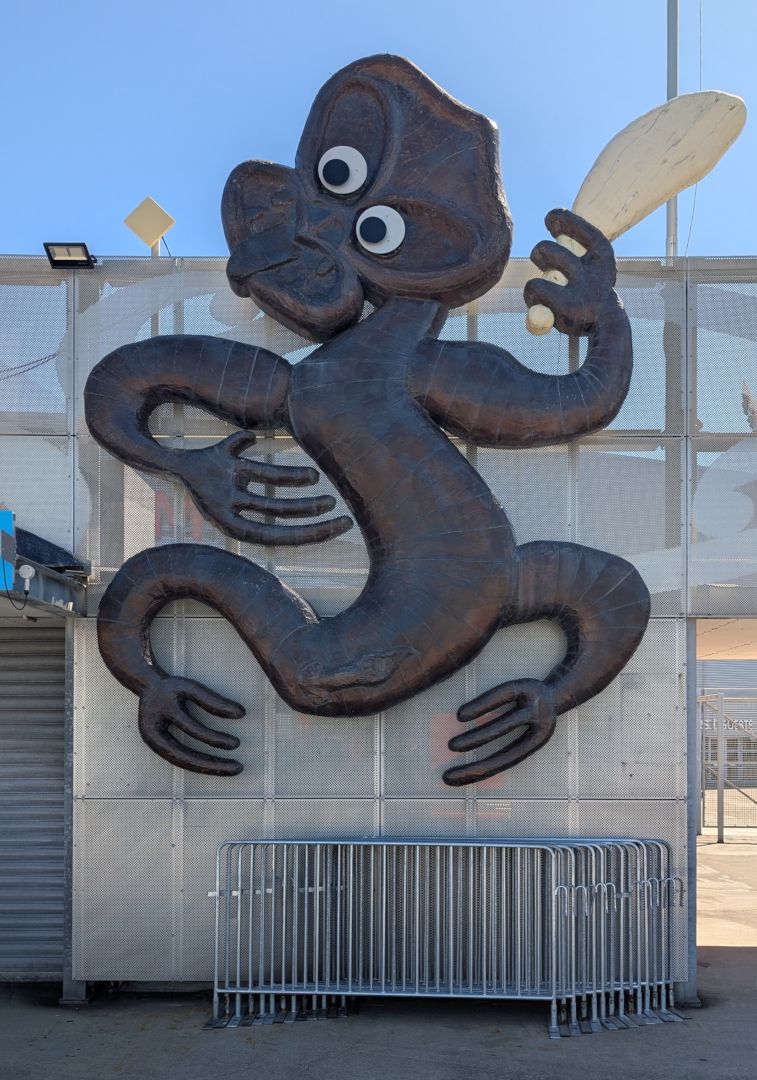
The Manaia figures seen on either side of the mountain, become the Kaitiaki (guardians) of the Stadium.
The figure on the left is a wahine toa (female warrior) who represents female elements.
The other, on the right, is a tama toa (male warrior) who represents male elements.
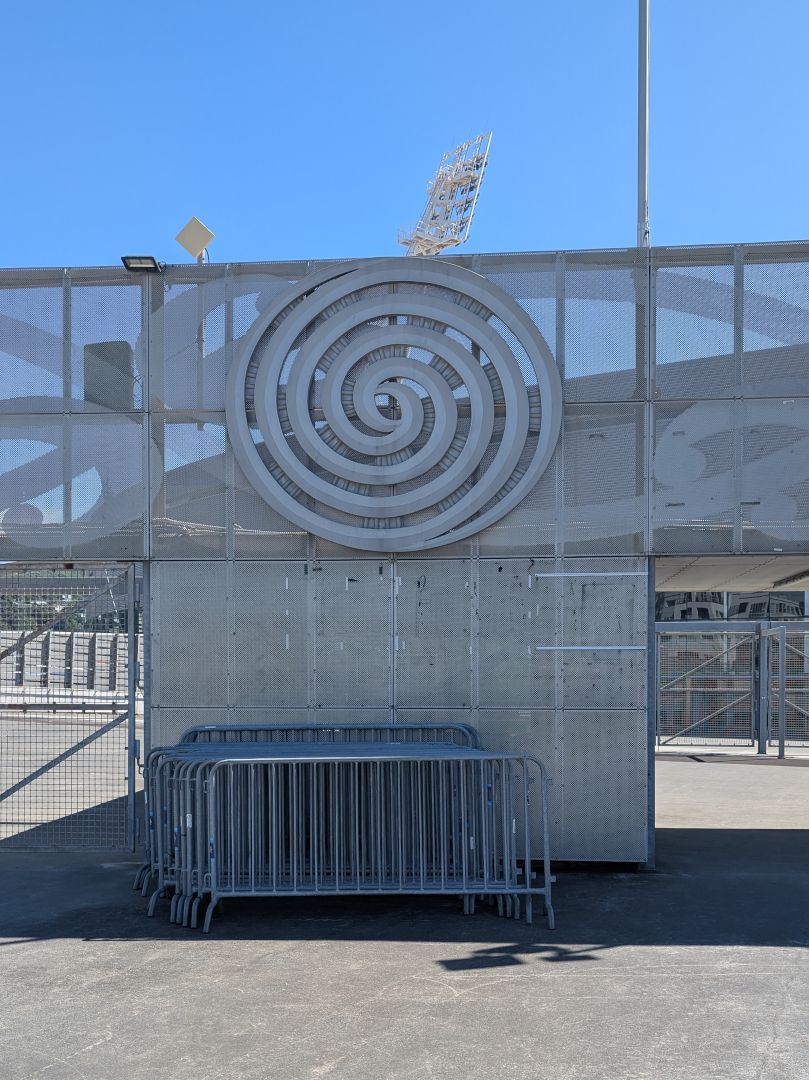
Ka Awatea (The Spirals)
These spiral sculptures signify the dawn of a new day, with the new beginnings, new ideas and new challenges that this brings.
Ka Awatea also represents the creation story, in which the elements of harmony and co-operation are first evident, alongside the elements of conflict and competition.
Also contained in this design is the history and development of relationships, traditions, artistic forms and sporting achievements.
Kowhaiwhai (façade, back panel design)
This pattern depicts two elements:
a) Tangaroa (guardian of all sea and waterways)
Tangaroa was a child of Ranganui (the sky father) and Papatuanuku (the earth mother). He is guardian of the sea, lakes and waterways. Tangaroa has a close association with the site that this Stadium sits on, where over a period of time, it was reclaimed from the sea.
b) Nga Mangopare (The Hammerhead Sharks)
“Kia mate Mangapare kei mate Wheke: It is better to die like a Hammerhead Shark than an Octopus”.
This proverb refers to the fact that, if caught, the Hammerhead Shark will not give up, but will fight to the end, while the Octopus will give up without a fight. The Mangopare are positioned in the Kowhaiwhai pattern in readiness for competition.
Nga Mangopare (Hammerhead Sharks) are known for their strength and determination to fight to the end. This is symbolic of two teams who will meet in competition on the field, and both of whom with determination and skill display the qualities of the Mangopare.
The stadium was completed in December 1999 and was officially opened by Sir Michael Hardie-Boyes, Governor General of New Zealand on 3 January 2000.
The stadium has had various corporate naming sponsors over the years, including: TrustBank; Westpac (bank), Sky (broadcaster), and Hnry (accounting software).
See also: